str dh550 user manual

The Sony STR‑DH550 is a versatile AV receiver designed for home theater enthusiasts. This manual walks you through initial setup, operation, and troubleshooting, ensuring optimal audio‑video performance and a cinema‑quality experience. Enjoy crisp audio and sharp visuals. Follow the guide optimal setup
Key Specifications
The Sony STR‑DH550 delivers 120 W per channel, 960 W total, with 7.2‑channel surround, Dolby Atmos, DTS:X, and a 3‑band EQ. It supports 4K HDR10, HLG, Dolby Vision via four HDMI 2.0 ports (18 Gbps). Audio formats: Dolby TrueHD, DTS-HD Master Audio, PCM up to 24‑bit/192 kHz. Connectivity: Bluetooth 5.0, Wi‑Fi 802.11ac, Ethernet, USB‑to‑HDMI converter. Speaker wiring: 4‑ohm to 8‑ohm, 3‑way crossover. Front panel: 5‑inch display, 3‑band EQ knob, 3‑way selector. Power: 120 W idle, 300 W max. Dimensions: 9.6 in × 5.9 in × 2.3 in, 9.2 lb. Low‑noise amplifier, 32‑bit DSP.
The receiver’s power consumption is 120 W in standby and 300 W at full load, with a 100–240 V AC input and 50/60 Hz frequency; Dimensions: 9.6 in × 5.9 in × 2.3 in, 9.2 lb. The front panel features a 5‑inch color display, a 3‑band EQ knob, and a 3‑way speaker selector. Connectivity includes four HDMI 2.0 ports (18 Gbps each), Bluetooth 5.0, Wi‑Fi 802.11ac, Ethernet, and a USB‑to‑HDMI converter. The receiver supports up to 8‑channel speaker setups with 4‑ohm to 8‑ohm impedance. Its 32‑bit DSP processes audio signals with minor distortion, while the low‑noise amplifier delivers clean power to channel. Compact design and build quality support installations and upgrades.
The STR‑DH550 also features a 3‑band graphic equalizer, a speaker selector, and supports up to 8‑channel speaker setups with 4‑ohm to 8‑ohm impedance. Its DSP processes signals with distortion, while the amplifier delivers clean power to channel, creating an immersive experience for listening in today!
Enjoy audio!
Initial Setup
Connect the receiver to a power outlet, then link HDMI cables from your TV and audio sources. Position the unit on a stable surface, ensuring ventilation. Press the power button to boot, follow on screen prompts to select language, date, andnet. Verify all inputs appear correctly.
Power and Placement
Before powering on the Sony STR‑DH550, ensure the unit is placed on a flat, stable surface away from direct sunlight and heat sources. Position it at least 12 inches from walls to allow proper airflow. Connect the supplied power cord to a grounded outlet, and avoid using extension cords or power strips that may cause voltage drops. The receiver’s ventilation slots should face upward or outward; do not block them with cables or other devices. For optimal audio performance, keep the unit upright and avoid tilting. Use the included cable ties to manage HDMI, optical, and speaker wires neatly, preventing tangles and reducing interference. After securing the unit, allow a 5‑minute acclimation period before turning on the power switch to ensure internal components stabilize.
Ensure the receiver’s power cord is firmly inserted into the unit’s power input and the outlet is not overloaded. The STR‑DH550’s internal fuse protects against short circuits, but avoid using the unit in damp or dusty environments. For optimal heat dissipation, place the receiver in a well‑ventilated area, keeping at least 6 inches of clearance on all sides. If you plan to mount the unit on a wall, use a sturdy bracket rated for the receiver’s weight and secure it with appropriate hardware. When routing cables, keep them away from high‑current power lines to reduce electromagnetic interference. Finally, label all connections clearly; this facilitates future maintenance and prevents accidental disconnections. Keep the unit away from heat sources!!!
Connecting Audio Sources
To connect external audio devices to the Sony STR‑DH550, locate the dedicated inputs on the rear panel. For optical or coaxial digital audio, insert the appropriate cable into the “OPTICAL” or “COAXIAL” jack, ensuring a snug fit. For analog stereo sources, use the “AUX” or “LINE IN” ports; connect the 3.5‑mm or RCA cable firmly. If you wish to use a Bluetooth‑enabled source, press the “BT” button on the front panel, then pair your device via the receiver’s on‑screen menu. For CD or DVD players, connect the component or composite video cables and the corresponding audio outputs to the receiver’s “VIDEO IN” and “AUDIO IN” jacks. When using a home‑theater amplifier, route the speaker wires from the receiver’s speaker terminals to the amplifier’s input, observing correct polarity. After all connections are secure, power on the receiver and select the appropriate input source from the front‑panel “INPUT” button or remote control. The STR‑DH550 will automatically detect the audio format and adjust the processing settings for optimal sound quality. If you experience signal loss, verify cable integrity and ensure the correct input mode is selected. For troubleshooting, consult the “Audio Troubleshooting” section of the user manual. Remember to keep cables organized to prevent tangles and reduce electromagnetic interference. Additionally, if you are using a multi‑room setup, connect the receiver’s “ARC” or “eARC” output to the compatible TV or soundbar, and enable the “HDMI‑CEC” function in the settings menu to allow seamless control. When connecting a streaming device, use the HDMI‑ARC port for best audio return, and set the receiver to “HDMI‑ARC” mode. Finally, label each cable with a marker or adhesive tag to simplify future maintenance and avoid confusion during upgrades or repairs. Proper cable management not only preserves signal integrity but also enhances safety by preventing accidental disconnections or cable strain. The receiver supports up to 7.2 channel surround sound, so when connecting a 5.1 or 7.1 speaker system, ensure that each speaker wire is connected to the correct speaker terminal and that the speaker impedance matches the receiver’s specifications to avoid distortion. When connecting a turntable, use the “PHONO” input and enable the built‑in phono preamp via the menu, or connect the turntable to an external preamp and use the “LINE IN” input. This ensures proper bass response and prevents signal clipping. For professional audio equipment, use balanced XLR cables into the receiver’s “LINE IN” if available, or use a DI box to convert unbalanced signals to balanced, reducing noise over long cable runs. Enjoy crisp sound now!
Connecting Video Sources
To connect a video source to the Sony STR‑DH550, use the rear panel’s HDMI or component inputs and composite inputs. Modern devices use a high‑speed HDMI cable to the “HDMI IN” port; the receiver auto‑detects 1080p or 4K and sets the picture mode, supporting HDMI 2.0 for higher bandwidth. Older gear uses component cables (red, blue, green) to “COMPONENT IN” and composite cables (yellow) to “COMPOSITE IN” for 720p signals. Ensure cables are seated firmly to avoid flicker or loss, especially on long runs. If your source has an optical audio output, plug it into the receiver’s “OPTICAL” jack and choose “AUDIO ONLY”; for other audio, use “VIDEO ONLY” to avoid duplication, ensuring clear separation. After connecting, power on the receiver and press the “INPUT” button to cycle through sources until the video appears, then adjust settings as needed! The STR‑DH550 will auto‑detect the format and apply the picture mode, offering crisp image quality. If the image is missing, verify the TV is set to the correct HDMI input and that “HDMI‑CEC” is enabled for switching. For multi‑room setups, connect the receiver’s “ARC” or “eARC” output to a TV to return audio. Label each cable with a marker or adhesive tag to simplify maintenance and avoid confusion during upgrades or repairs. Cable management preserves signal integrity and enhances safety by preventing disconnections or strain. The receiver supports up to 7.2 channel surround sound; ensure each speaker wire is connected to the correct terminal and impedance matches specs to avoid distortion. Enjoy crisp video now! Thanks
Remote Control Overview
The remote controls power, source selection, volume, and menu navigation. Press the power button to turn the receiver on or off. The source button cycles through HDMI, component, and composite inputs. Volume buttons adjust level, while the menu button opens settings.
Basic Functions
Power: The power button toggles the receiver on and off, automatically restoring the last source and volume level. Volume: The + and ⎯ buttons adjust the loudness in 1‑dB increments; the Mute button silences all channels instantly. Source: The Source button cycles through HDMI, component, composite, and optical inputs, displaying the current selection on the front panel. Menu: The Menu button opens the on‑screen menu, allowing quick access to audio, video, and network settings. Input‑select: The Input‑Select button jumps directly to the last used source, useful for switching between a Blu‑ray player and a gaming console. Preset buttons: The three preset buttons (1, 2, 3) store favorite source and volume combinations for rapid access. Back and Exit buttons navigate the menu hierarchy. The remote also supports Voice control via the built‑in microphone, enabling hands‑free operation of volume, mute, and source changes. The remote also features a dedicated Power button, a Power‑Off function, and a Power‑On function that restores the previous state. The Menu navigation uses arrow keys for up, down, left, right, and a Select key to confirm choices. The Back key returns to the previous screen, while the Exit key exits the menu. The Input‑Select button can be programmed to cycle through a custom list of sources. The Preset buttons can be assigned to specific source‑volume combinations for quick access. The remote supports Voice commands like “volume up”, “mute”, “source HDMI1”, and “menu” for hands‑free control. A battery‑low indicator on the front panel alerts you when replacement is needed. The remote’s ergonomic design includes a textured grip for comfortable handling. The remote’s buttons are recessed for a smooth feel. It supports both wired and wireless remote modes.

Advanced Features
The Sony STR‑DH550 offers a suite of advanced features that elevate the home‑theater experience. Dolby Atmos and DTS:X up‑mixing convert stereo or 5.1 source material into immersive 7.1.2 or 5.1.2 soundscapes, while the built‑in 3D audio engine automatically detects and renders 3D content for realistic spatial depth. Speaker‑Level Calibration uses a built‑in microphone to measure room acoustics, automatically adjusting each channel’s level, delay, and crossover frequency for balanced sound. Room‑Correction mode applies equalization curves tailored to the room’s size and shape, reducing standing waves and improving clarity. HDMI‑ARC and eARC support transmit high‑resolution audio back to compatible soundbars or AV receivers, simplifying the setup. Network Audio streams music from DLNA, UPnP, or Spotify Connect, and the USB port plays MP3, WAV, or WMA files directly from a flash drive; Remote Control pairs with a smartphone app for voice commands, volume control, and menu navigation. Auto‑Power‑Off saves energy by turning the unit off after inactivity. Multi‑room function sends audio to a second receiver or speaker system for synchronized playback across rooms. Input‑Select and Preset buttons store favorite source‑volume combinations for instant access. Power‑On/Off restores the previous state. HDMI‑CEC controls connected devices, such as turning the TV on when the receiver powers on. Audio‑Format selection lets users choose between PCM, Dolby Digital, DTS, and other formats. xxxxxxxxxxxxxxxxxxxxxxxxxxxxxxxxxxxxxxxx
Audio Settings
Adjust the STR‑DH550’s audio output with format selection, volume, balance, and speaker configuration. Use the on‑screen menu to choose Dolby Digital, DTS, or PCM, set equalizer presets, and fine‑tune bass/treble. The auto‑calib feature optimizes speaker levels for room acoustics.
Audio Format Selection
To choose the best audio format for your source, press the “Audio” button on the remote and navigate to “Audio Format.” The Sony STR‑DH550 supports Dolby Digital, DTS, 5.1/7.1‑channel PCM, and stereo PCM. For Blu‑ray discs, the receiver automatically detects the highest‑quality format, but you can override it by selecting “Auto” or a specific codec; For music playback via HDMI or optical, the unit defaults to PCM; enable “Bit‑stream” if your source contains Dolby Digital or DTS data. When a 5.1 or 7.1 surround signal is detected, the receiver will automatically switch to the corresponding speaker configuration, ensuring that each channel receives the correct audio stream. If you prefer a flat, unprocessed sound, choose “Stereo PCM” and disable “Surround” in the “Audio Settings” menu. For gaming consoles, set the audio format to “Auto” to allow the console to send the best available codec; Remember to check the “Audio Output” setting to match the connected speaker system’s capabilities. The “Audio Format” menu also offers a “Digital‑to‑Analog Converter (DAC)” option for high‑resolution audio files, providing a cleaner conversion path and reducing digital noise. After selecting your desired format, press “Enter” to confirm and return to the main menu. The receiver will now process all incoming signals according to the chosen setting, delivering clear, immersive sound. With support for up to 24‑bit/192kHz high‑resolution audio, the receiver delivers studio‑grade sound directly now from your source devices.

Equalizer and Tone Controls
On the Sony STR‑DH550, the “Equalizer” feature lets you fine‑tune the frequency response to match your listening environment or personal preference. Access it by pressing the “EQ” button on the remote, then choose from the preset programs: “Flat,” “Rock,” “Jazz,” “Pop,” “Classical,” or “Movie.” Each preset adjusts the bass, midrange, and treble bands automatically. For a more customized approach, select “Manual” and use the on‑screen sliders to boost or cut frequencies in 1‑kHz increments from 20 Hz to 20 kHz. The receiver also offers a “Bass Boost” toggle for low‑frequency emphasis, now!!! The “Tone” controls allow you to adjust the overall sound balance. The “Balance” knob shifts the audio between left and right channels, while the “Fade” knob moves sound between front and rear channels. The “Volume” slider in the “Tone” menu can be set to “Auto” to maintain consistent loudness across sources or manually adjusted for a specific listening level. The “Dynamic Range” setting can be enabled to compress loud and soft passages, which is useful for watching movies with varying volume levels. All these controls are accessible from the main menu under “Audio Settings,” ensuring that you can quickly adapt the sound to different content types or room acoustics. By mastering the equalizer and tone controls, you can achieve a balanced, immersive audio experience that highlights the strengths of your speaker system and the content you enjoy.

Video Settings
Adjust picture modes, brightness, contrast, and sharpness. Use the “Picture” menu to select “Standard,” “Cinema,” or “Game.” HDMI input auto‑detects resolution, but you can manually set 1080p or 4K. Enable “Dynamic Contrast” for deeper blacks. HDR10 and Dolby Vision enhance color contrast.
Picture Modes
The Sony STR‑DH550 offers preset picture modes to optimize image quality for different content and viewing conditions. “Standard” gives a balanced, natural look with moderate contrast and color saturation, suitable for everyday TV, streaming, and casual gaming; “Cinema” enhances depth and color richness for a more immersive movie experience. “Game” mode prioritizes low input lag and sharpness for competitive play. “Sports” mode increases motion clarity and contrast for fast‑moving action. “Dynamic” boosts brightness and contrast, while “Vivid” saturates colors for a vibrant display. The receiver also supports HDR10 and Dolby Vision, automatically detecting compatible sources and applying tone mapping. Users can fine‑tune each mode by adjusting brightness, contrast, sharpness, color temperature, and hue from the Picture menu. For optimal results, calibrate the receiver with a test pattern or use built‑in calibration tools.
When using HDMI 2.0 or higher, the receiver auto‑detects 4K/60Hz or 4K/120Hz signals and selects the proper picture mode. Users can override by choosing “HDMI 4K” or “HDMI 2K” in the Picture menu. The “Custom” option lets advanced users save personalized settings for brightness, contrast, sharpness, color tone, and gamma. Built‑in calibration tools include a colorimeter mode that measures color accuracy and adjusts the LUT. A “Night” mode reduces brightness and shifts the palette toward cooler tones for late‑night viewing.
Users can also access the Picture menu to adjust gamma curves, white balance, and color depth, ensuring compatibility with various displays and personal preferences. The receiver’s intuitive interface makes these adjustments quick and reliable. Enjoy. Now.
HDMI and Display Configuration
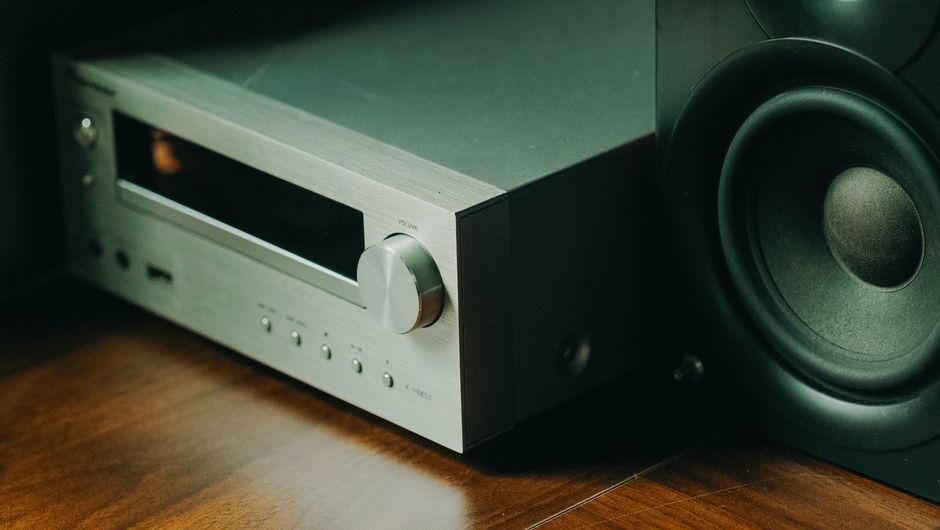
The Sony STR‑DH550 AV receiver supports HDMI 2.0 and 2.1, enabling 4K/60 Hz and 4K/120 Hz playback with HDR10 and Dolby Vision. When a source is connected, the unit automatically detects the signal type and selects the appropriate HDMI mode. Users can manually override by navigating to the HDMI menu and choosing “HDMI 4K,” “HDMI 2K,” or “HDMI 3D.” The “HDMI 2.1” setting unlocks 8K/60 Hz support if the display is compatible. The receiver also offers HDMI ARC and eARC for audio passthrough to compatible soundbars or AV receivers. For optimal picture quality, enable “HDMI Deep Color” and “HDMI HDR” in the Display Settings. The “HDMI Color Space” can be set to RGB, YCbCr 4:4:4, or YCbCr 4:2:0, depending on the source and display. The “HDMI 3D” mode supports side‑by‑side and top‑bottom formats. The “HDMI 4K” mode automatically applies the correct resolution and refresh rate. The “HDMI 2K” mode is ideal for 1080p sources. The “HDMI 3D” mode is ideal for 3D content. The “HDMI 4K” mode is ideal for 4K content. In addition, the receiver allows users to configure HDMI 2.0/2.1 bandwidth limits, set HDMI 2.1 HDR10+ support, and enable HDMI 3D passthrough. The HDMI 2.0 menu offers options for HDMI 2.0a and 2;0b compliance, ensuring backward compatibility. Users can toggle HDMI auto‑detect, simplifying setup for multiple devices. The firmware supports HDMI 2.1 features such as Variable Refresh Rate (VRR) and Auto Low Latency Mode (ALLM), essential for gaming. For home theater, the HDMI 4K mode handles HDR10 and Dolby Vision metadata, while the HDMI 2K mode supports 1080p HDR10. The HDMI 3D mode is rarely used but remains available for legacy 3D Blu‑Rays. The display configuration can be fine‑tuned by adjusting HDMI color depth, enabling 10‑bit or 12‑bit output, and selecting the appropriate HDMI audio format. Users can set the HDMI audio delay to synchronize audio with video for lag‑free viewing. The receiver’s HDMI 2.1 support includes 48 kHz and 96 kHz audio sampling rates, ensuring high‑resolution audio playback. Users can also choose to enable HDMI 2.1 4K HDR10+ for compatible displays, providing dynamic metadata for enhanced contrast and brightness.

Network Connectivity
The Sony STR‑DH550 offers built‑in Wi‑Fi (802.11b/g/n) and Ethernet for seamless network integration. The receiver supports DLNA, Chromecast, and AirPlay 2, allowing streaming from compatible devices. To enable Wi‑Fi, press the “Setup” button, navigate to “Network,” select “Wi‑Fi,” and choose your SSID from the list. Enter the password using the on‑screen keyboard and confirm. For Ethernet, simply connect a CAT5e or higher cable to the rear, panel port; the unit will auto‑detect the connection. The receiver also supports UPnP media sharing, enabling playback of local files from network‑attached storage. In the “Network” menu, users can configure DNS, proxy, and port forwarding settings for advanced routing. The “Firmware Update” option checks for the latest software via the Internet, ensuring new features and bug fixes. The STR‑DH550 also includes a “Remote Control” app for iOS and Android, which requires the same network connection. For gaming consoles, the receiver can act as an HDMI‑ARC bridge, routing audio to the TV or soundbar. The unit’s “Network” diagnostics display latency, packet loss, and bandwidth usage, useful for troubleshooting streaming issues. Users can also set up a VPN client within the receiver’s firmware to secure remote access. The STR‑DH550 supports automatic network discovery, simplifying the addition of new devices. When a new device joins the network, the receiver will prompt the user to add it to the “Device List.” The “Network” settings also allow users to toggle “Guest Mode,” restricting access to the receiver’s media server. Finally, the receiver’s “Remote Control” app can be used to control playback, volume, and source selection from a smartphone or tablet, providing a convenient wireless interface.