patanjali yoga sutra pdf in english

Patanjali’s foundational text, available as a PDF in English, details yoga’s path to liberation. Discover ancient wisdom, exploring concentration and conviction within its sutras.
Historical Context of the Sutras
Patanjali’s Yoga Sutras, now widely accessible as a PDF in English, emerged from a rich Indian philosophical tradition, likely compiled between the 2nd century BCE and the 4th century CE. This period witnessed the flourishing of various schools of thought, including Samkhya, which profoundly influenced Patanjali’s work.
Archaeological discoveries in Israel, mirroring ancient times, offer glimpses into contemporaneous belief systems. The Sutras arose amidst political instability, including conflicts like those faced by early Israel, demanding inner peace. The text’s enduring relevance speaks to its timeless wisdom, readily available today through digital PDF formats.
Patanjali: The Author and His Significance
Though shrouded in some mystery, Patanjali is revered as the systematizer of yoga philosophy, compiling his insights into the Yoga Sutras, now conveniently found as a PDF in English. He wasn’t the originator of yoga, but rather codified existing practices and concepts.
Like uncovering ancient Israeli history, Patanjali’s work reveals a profound understanding of the mind. His significance lies in providing a practical roadmap – the eight limbs – for achieving liberation. Accessing the Sutras via PDF allows modern practitioners to connect with this timeless wisdom.
The Relevance of Yoga Sutras in Modern Times
In today’s fast-paced world, the Yoga Sutras, readily available as a PDF in English, offer a powerful antidote to stress and anxiety. Just as understanding Israel’s complex history provides context, the Sutras provide a framework for self-understanding.
Patanjali’s teachings on controlling the fluctuations of the mind remain remarkably relevant. The accessibility of a PDF translation allows anyone to explore these ancient principles and integrate them into daily life, fostering inner peace and resilience.

Understanding the Structure of the Yoga Sutras
Patanjali’s work, often found as a convenient PDF in English, is divided into four chapters (Padas) comprised of concise, aphoristic sutras.
The Four Chapters (Padas) Explained
Patanjali’s Yoga Sutras, readily accessible as a PDF in English, are structured into four distinct chapters, known as Padas. Samadhi Pada explores contemplative states and defines yoga. Sadhana Pada details practical methods for achieving yoga, including Kriya Yoga. Vibhuti Pada delves into the potential powers (Siddhis) arising from practice, cautioning against attachment. Finally, Kaivalya Pada elucidates liberation (Kaivalya) and the nature of the True Self (Purusha). Each Pada builds upon the previous, offering a comprehensive roadmap for spiritual growth, easily studied through available English translations.
Sutras: The Aphoristic Style
The Patanjali Yoga Sutras, often found as a convenient PDF in English, are composed of 196 concise aphorisms, or sutras. This succinct style demands careful study and contemplation. Each sutra encapsulates a profound principle of yoga philosophy and practice. Understanding these condensed statements requires a qualified teacher or detailed commentary. The brevity encourages memorization and repeated reflection, unlocking deeper layers of meaning. Accessing an English translation PDF facilitates personal exploration of this ancient wisdom.
The Importance of a Qualified Teacher
While Patanjali Yoga Sutras PDFs in English offer accessibility, a qualified teacher remains crucial. The sutras’ aphoristic nature benefits from experienced guidance, clarifying nuanced meanings. A teacher provides context, preventing misinterpretations and fostering accurate practice. They illuminate the subtle connections between the sutras and lived experience. Self-study with a PDF is valuable, but a teacher’s wisdom accelerates understanding and ensures a safe, effective journey toward self-realization, unlocking the text’s full potential.

Samadhi Pada: Contemplation
Samadhi Pada, found within Patanjali’s Yoga Sutras (available as a PDF in English), explores concentration and absorption into the One, a blissful state.
Defining Yoga: The Core Concept
Patanjali’s Yoga Sutras, readily accessible as a PDF in English, fundamentally defines yoga as “stilling the fluctuations of the mind.” This core concept, explored in Samadhi Pada, isn’t merely physical postures but a comprehensive path to self-realization. The text details how consistent practice and detachment lead to a state of meditative absorption.
Understanding this definition, as presented in the sutras, is crucial. It’s about controlling the chitta – the mind-stuff – to achieve clarity and ultimately, liberation (kaivalya). Numerous English translations offer varying nuances, making careful study essential.
The Nature of Consciousness (Chitta)
Patanjali’s Yoga Sutras, available as a PDF in English, describes chitta as the storehouse of impressions, memories, and karmic residue shaping our perception. This consciousness isn’t a static entity but a constantly fluctuating field influenced by experiences.
The sutras emphasize that controlling these fluctuations is key to achieving samadhi. Understanding chitta’s nature, as detailed in the text, requires diligent self-observation and practice. Different English translations illuminate subtle aspects of this complex concept, aiding deeper comprehension.
Methods to Control the Fluctuations of the Mind
Patanjali’s Yoga Sutras, accessible as a PDF in English, outlines practices to quiet the mind’s incessant chatter. Abhyasa (consistent effort) and vairagya (non-attachment) are central, fostering mental discipline.
The text details techniques like pratyahara (sense withdrawal) and dharana (concentration) to refine focus. Exploring various English translations of the sutras reveals nuanced approaches to these methods. Consistent practice, guided by the text, cultivates inner stillness and clarity.

Sadhana Pada: Practice
Patanjali’s Yoga Sutras, found in English PDF format, details Kriya Yoga – disciplined action. Overcome obstacles through dedicated practice and virtuous qualities.
Kriya Yoga: The Yoga of Action
Kriya Yoga, as outlined in Patanjali’s Yoga Sutras – readily accessible as an English PDF – represents a foundational practice. It encompasses tapas (discipline), svadhyaya (self-study), and ishvara pranidhana (surrender to a higher power). This potent combination purifies the mind, preparing it for deeper meditative states.
The Sutras emphasize that consistent, dedicated action, performed with awareness and detachment, diminishes the kleshas – the afflictions that bind us to suffering. Studying the text in English provides direct access to these transformative principles, enabling practitioners to embody yoga not merely as a physical practice, but as a complete way of life.
The Kleshas: Obstacles to Yoga
Patanjali’s Yoga Sutras, conveniently found as an English PDF, identifies five kleshas – afflictions hindering our progress toward liberation. These are ignorance, egoism, attachment, aversion, and fear of death. They cloud our perception, causing suffering and perpetuating the cycle of rebirth.
Understanding these obstacles, detailed within the Sutras, is crucial. The text offers methods to diminish their influence through mindful awareness and disciplined practice. Accessing the PDF allows for focused study, empowering practitioners to dismantle these deeply ingrained patterns and cultivate inner peace.
Cultivating Virtues and Positive Qualities
Patanjali’s Yoga Sutras, readily available as an English PDF, emphasizes cultivating virtues to counteract the kleshas. These include compassion, contentment, and equanimity. By fostering these qualities, we weaken the grip of negative patterns and move closer to self-realization.
The Sutras detail practices for developing these virtues, offering a roadmap for ethical living. Studying the PDF provides accessible guidance, enabling practitioners to integrate these principles into daily life, fostering inner harmony and a more fulfilling existence.

Vibhuti Pada: Powers
Patanjali’s Yoga Sutras, found in English PDF format, explores siddhis – supernatural powers – but cautions against attachment, prioritizing liberation over worldly abilities.
The Eight Siddhis (Supernatural Powers)
Patanjali’s Yoga Sutras, accessible as an English PDF, detail eight siddhis – extraordinary powers attained through dedicated practice. These include anima (reducing body size), mahima (expanding body size), garima (increasing weight), laghima (decreasing weight), prapti (acquiring anything), prakamya (fulfilling desires), ishitva (lordship), and vashitva (control over others).
However, the text emphasizes these are potential distractions on the path to kaivalya, ultimate freedom. Focusing solely on these powers can hinder spiritual progress, creating attachment and ego. The PDF clarifies that true liberation lies beyond supernatural abilities.
The Dangers of Attachment to Powers
The Patanjali Yoga Sutras, readily available as an English PDF, caution against the allure of the siddhis – supernatural powers. Attachment to these abilities fosters ego and obstructs the path to genuine liberation, kaivalya. The text warns that focusing on powers reinforces the illusion of self, hindering detachment.
A PDF study reveals that seeking powers validates the identification with the mind and body, rather than realizing the true Self, Purusha. True yoga transcends these temporary abilities, aiming for complete freedom from suffering and illusion.
The True Goal Beyond Powers
The Patanjali Yoga Sutras, accessible as an English PDF, emphasize that the siddhis (powers) are merely byproducts on the yogic path, not the ultimate destination. The core aim transcends supernatural abilities – it’s achieving Kaivalya, complete liberation and isolation of Purusha (true self).
Studying a PDF version clarifies that these powers can distract from the essential goal: realizing one’s true nature and dissolving the illusion of separation. The Sutras guide practitioners toward lasting freedom, beyond temporary phenomena.

Kaivalya Pada: Liberation
The final chapter, found in Patanjali Yoga Sutras PDF versions in English, details Kaivalya – isolation and freedom. Understand Purusha and achieve complete liberation!
Understanding Kaivalya (Isolation)
Kaivalya, as explored within a Patanjali Yoga Sutras PDF in English, signifies the absolute isolation of Purusha (true self) from Prakriti (nature). This isn’t a negative severance, but a realization of inherent separateness. The Sutras detail how mistaken identity with the ever-changing material world causes suffering.
Through diligent practice – encompassing the eight limbs – the veils of illusion are lifted. This allows Purusha to rest in its true nature: pure consciousness, unbound by limitations. Studying a translated PDF clarifies this complex concept, guiding practitioners toward ultimate freedom and self-realization, beyond the fluctuations of the mind.
The Nature of Purusha (True Self)
A Patanjali Yoga Sutras PDF in English reveals Purusha as pure consciousness, the unchanging witness, distinct from Prakriti (matter). It’s the true self, unaffected by the modifications of the mind or the experiences of the body. Understanding Purusha’s nature is central to liberation.
The Sutras emphasize that suffering arises from identifying with what is not the self – the ego, thoughts, and sensations. Through self-inquiry and disciplined practice, one can discern Purusha, achieving freedom from the cycle of birth and death, as detailed within the text.
The Path to Complete Freedom
A Patanjali Yoga Sutras PDF in English outlines the path – Kaivalya – as the cessation of suffering through realizing the distinction between Purusha and Prakriti. This involves consistent practice (abhyasa) and detachment (vairagya), dismantling the identification with the ego.
The Sutras detail the eight limbs of yoga, a progressive system for refining body and mind. Ultimately, complete freedom arises when the mind becomes still, and the true self shines forth, unburdened by illusion, as explained in the downloadable text.
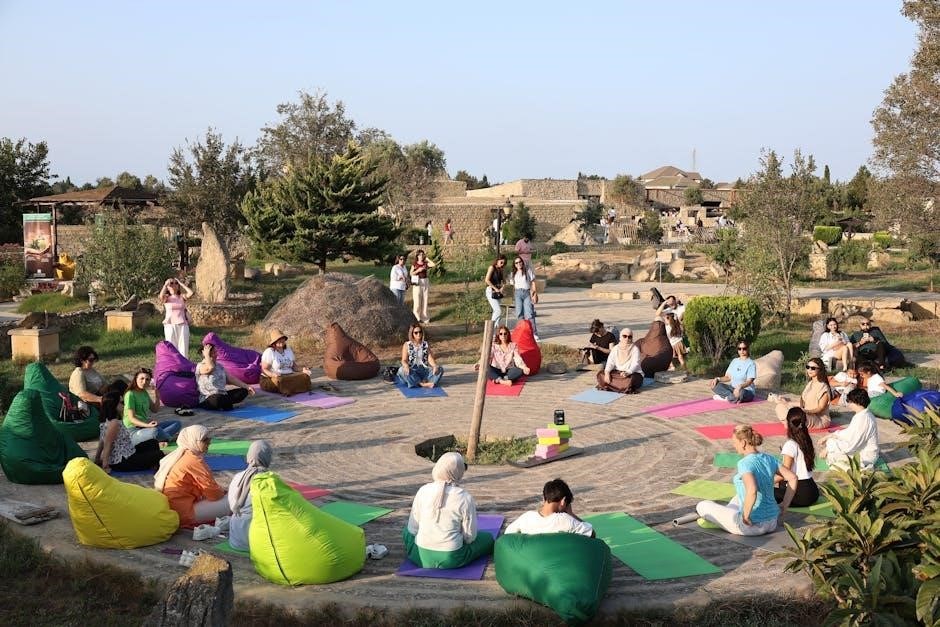
Key Concepts in Patanjali’s Yoga
A Patanjali Yoga Sutra PDF in English reveals core concepts like the eight limbs and Samadhi, guiding practitioners toward liberation and self-realization.
The Eight Limbs of Yoga (Ashtanga)
Patanjali’s Yoga Sutras, readily accessible as a PDF in English, systematically outline the eight limbs – Ashtanga – forming a comprehensive path to spiritual growth. These include Yamas (ethical restraints), Niyamas (observances), Asana (postures), Pranayama (breath control), Pratyahara (sense withdrawal), Dharana (concentration), Dhyana (meditation), and Samadhi (absorption).
Each limb builds upon the previous, creating a holistic practice. Studying a PDF translation clarifies how these interconnected elements work synergistically, fostering discipline, awareness, and ultimately, liberation. Understanding this structure is crucial for a dedicated yogic journey.
Pranayama: The Control of Breath
Pranayama, detailed within Patanjali’s Yoga Sutras – often found as a convenient PDF in English – is far more than simple breathing exercises. It’s a powerful technique to regulate prana, or life force, influencing mental and physical states. The Sutras explain how controlled breath calms the fluctuations of the mind.
Various techniques are described, each with specific effects. Accessing a translated PDF allows for deeper understanding of these nuances, enabling practitioners to harness breath’s potential for enhanced focus and spiritual awakening;
Pratyahara: Withdrawal of the Senses
Pratyahara, a crucial limb of yoga outlined in Patanjali’s Yoga Sutras – readily available as a PDF in English – signifies the inward turning of awareness. It’s the practice of detaching from external stimuli, reducing reliance on the senses. The Sutras detail how this cultivates inner stillness.
Studying a translated PDF reveals techniques to master this skill, lessening distractions and preparing the mind for deeper meditative states. This controlled sensory withdrawal is essential for profound self-discovery.

Finding Patanjali Yoga Sutras in English (PDF)
Numerous online sources offer the Yoga Sutras as a PDF in English, providing access to Patanjali’s teachings for convenient study and practice.
Reliable Online Sources for PDF Downloads
Several reputable websites host Patanjali’s Yoga Sutras in English as downloadable PDF files. Internet Archive provides digitized versions, including older translations, offering a glimpse into textual history. Sacred texts also presents various translations, allowing comparison of interpretations. Be mindful of copyright restrictions when downloading and distributing these resources. Always verify the source’s credibility to ensure accuracy and avoid potentially misleading content. Look for sites affiliated with established yoga organizations or academic institutions for reliable access to authentic translations. Consider checking university library digital collections for scholarly editions of the Sutras.
Different Translations and Their Nuances
Numerous English translations of the Patanjali Yoga Sutras exist, each reflecting the translator’s perspective and understanding. Edwin Bryant’s translation is praised for its scholarly accuracy, while Swami Vivekananda’s offers a more accessible, devotional approach. Chip Hartranft’s version emphasizes a practical, experiential understanding. Exploring multiple translations reveals subtle nuances in interpretation, enriching comprehension. The choice depends on your background and goals; some prioritize literal accuracy, others emphasize philosophical context. Downloading PDF versions allows side-by-side comparison, fostering deeper insight into this ancient text.
Considerations When Choosing a Translation
Selecting a Patanjali Yoga Sutras PDF in English requires careful thought. Consider the translator’s background – are they a scholar, practitioner, or both? Look for translations with comprehensive commentaries to illuminate complex concepts. Evaluate the language; is it accessible or overly academic? Some translations prioritize literal accuracy, while others focus on conveying the essence of the teachings. Read reviews and sample passages before committing. A good translation will resonate with your understanding and inspire your practice, deepening your connection to this timeless wisdom.

Applying the Yoga Sutras to Daily Life
A Patanjali Yoga Sutras PDF in English guides integrating yoga’s principles – Yamas, Niyamas – into everyday actions, fostering mindful living and inner peace.
Integrating Yamas and Niyamas
Delving into a Patanjali Yoga Sutras PDF in English reveals the ethical foundations of yoga: the Yamas and Niyamas. These aren’t mere restrictions, but guidelines for harmonious living. Yamas – non-violence, truthfulness, non-stealing, continence, and non-possessiveness – shape our interactions. Niyamas – purity, contentment, discipline, self-study, and surrender – cultivate inner refinement.
Applying these principles daily, guided by the Sutras, transforms relationships, work, and self-perception. Understanding their nuances, accessible through detailed translations, fosters a life aligned with yoga’s core values, promoting ethical conduct and inner peace. The PDF serves as a constant reminder of these essential practices.
The Role of Asana and Meditation
A Patanjali Yoga Sutras PDF in English clarifies that asana (postures) and meditation aren’t the ultimate goal, but tools for preparing the body and mind. Asana builds strength and stability, lessening distractions. Meditation, detailed within the Sutras, cultivates focused awareness, quieting the fluctuations of the mind (chitta vritti).
These practices, when approached with mindful intention, facilitate deeper states of concentration (samadhi). The PDF emphasizes that consistent practice, guided by ethical principles, unlocks yoga’s transformative potential, leading towards self-realization and inner peace.
Living a Yogic Lifestyle
A Patanjali Yoga Sutras PDF in English reveals yoga extends far beyond the mat. It’s a holistic way of being, encompassing ethical conduct (yamas and niyamas) in daily life. This includes non-violence, truthfulness, and contentment. Studying the Sutras encourages mindful interactions, cultivating compassion and self-awareness.
Integrating these principles fosters inner harmony and a deeper connection to oneself and the world. The PDF highlights that consistent practice, both on and off the mat, is key to embodying a truly yogic existence.
The Yoga Sutras and Other Yoga Traditions
A Patanjali Yoga Sutras PDF in English clarifies its link to Raja Yoga, influencing modern practices. It contrasts with Hatha Yoga’s physical focus.
Comparison with Hatha Yoga
While both stem from ancient yoga traditions, the Patanjali Yoga Sutras, readily available as a PDF in English, prioritize mental discipline and liberation (Kaivalya). Hatha Yoga, conversely, emphasizes physical postures (asanas) and purification techniques. The Sutras offer a philosophical framework, detailing eight limbs for holistic growth, whereas Hatha Yoga often focuses on preparing the body for deeper meditative states.
A downloadable Patanjali text provides the theoretical underpinnings, while Hatha Yoga represents a practical application. Understanding both enriches a comprehensive yoga practice, bridging inner awareness with physical well-being.
Connections to Raja Yoga
The Patanjali Yoga Sutras, accessible as a PDF in English, are foundational to Raja Yoga, often termed the “royal path” of yoga. Raja Yoga systematically applies the Sutras’ eight limbs – ethical conduct, postures, breath control, sense withdrawal, concentration, meditation, and absorption – to achieve self-realization.
Essentially, the Sutras define Raja Yoga, providing its philosophical and practical guidelines. Studying a Patanjali text unlocks a deeper understanding of this powerful system, guiding practitioners toward mastery of the mind and ultimate freedom.
Influence on Modern Yoga Practices
Despite diverse modern styles, the Patanjali Yoga Sutras – readily available as a PDF in English – profoundly influence contemporary yoga. Many asana sequences, pranayama techniques, and meditation practices trace their roots back to the Sutras’ principles.
Even seemingly modern approaches often implicitly incorporate the eight limbs. Accessing a Patanjali text provides context, revealing the philosophical underpinnings of popular practices and deepening one’s understanding of yoga’s holistic system.

Resources for Further Study
Explore Patanjali’s teachings! Numerous books and online courses complement a PDF version in English, aiding deeper comprehension of these ancient yoga sutras.
Recommended Books and Commentaries
Alongside accessing a Patanjali Yoga Sutra PDF in English, enriching your understanding requires insightful commentaries. Swami Vivekananda’s “Raja Yoga” provides a classic interpretation, while B.K.S. Iyengar’s “Light on Yoga” offers practical application. Edwin Bryant’s scholarly translation is also highly regarded for its depth and accuracy. These resources illuminate the sutras, bridging ancient wisdom with modern practice. Consider exploring multiple perspectives to gain a holistic grasp of Patanjali’s profound teachings. Further study enhances comprehension beyond the PDF format, fostering a deeper connection to the philosophy.
Online Courses and Workshops
Supplementing your study of a Patanjali Yoga Sutra PDF in English with structured learning is invaluable. Numerous online platforms offer courses dissecting the sutras, led by experienced teachers. Workshops, both virtual and in-person, provide interactive exploration and community support. Look for programs focusing on practical application alongside textual analysis. These resources clarify complex concepts, moving beyond passive reading of the PDF. Engaging with instructors and fellow students deepens understanding and fosters a vibrant learning experience, enriching your yogic journey.
Yoga Teacher Training Programs
For a comprehensive understanding beyond a Patanjali Yoga Sutra PDF in English, consider a registered Yoga Teacher Training (RYT) program. These immersive courses dedicate significant time to the sutras, alongside asana, anatomy, and teaching methodology. Programs often include detailed study of various translations, fostering nuanced interpretation. A robust training provides a solid foundation for both personal practice and guiding others. It transforms theoretical knowledge from the PDF into embodied wisdom, preparing you to share this ancient philosophy effectively.